Shoppers in O’Fallon usually start with one practical question: which listings are real, available, and worth a dealership visit. When people search for a 2026 Subaru Trailseeker for sale near me, they are usually trying to solve three problems at once: location, availability, and fit.
The Trailseeker enters the Subaru EV conversation alongside the Subaru Solterra, but it targets buyers who want more power, cargo-minded utility, and recognizable Subaru capability cues such as X-MODE®. This guide explains how to search local inventory, compare trims, evaluate pricing, and verify charging and ownership details before you contact a store.
In O’Fallon, “for sale near me” rarely means the vehicle is physically parked inside city limits, because dealer groups often list inventory across nearby rooftops, storage lots, and incoming allocations. A smart inventory search starts with O’Fallon-first results, then expands to nearby Missouri metro dealers so you do not miss a unit that can be transferred quickly.
You will usually see three listing types: dealer inventory pages, marketplace aggregators, and incoming or allocated units that have not arrived yet. That distinction matters because a live listing can represent an in-stock SUV, an in-transit vehicle, or a future build slot, which changes your timeline and negotiating leverage.
Your real goal is not to click the first result and call immediately. The better approach is to learn the model, compare equipment such as Grip Control and trim content, and build a short list before contacting a store, because informed buyers waste less time and get cleaner quotes.
Set your budget first, including whether cash, financing, or lease terms matter more than getting an exact color or wheel design. Buyers who define payment structure early can judge incentives correctly, because a lease special and a finance rebate do not create the same long-term cost.
Then list the features you will not compromise on, such as EV range, AWD, charging access, cargo room, and safety tech like Blind-Spot Monitor. This step keeps you from overvaluing cosmetic differences while missing equipment that affects daily use in Missouri weather.
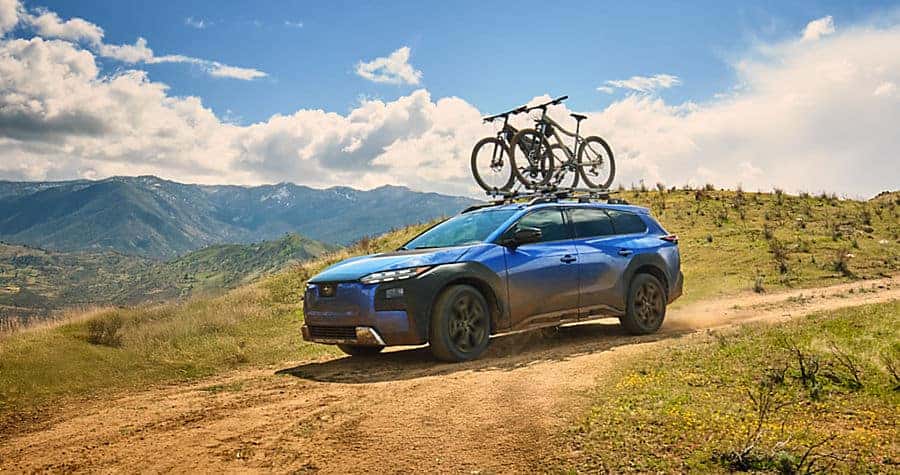
The 2026 Subaru Trailseeker is positioned as an all-electric drivetrain SUV with stronger adventure branding than many urban-focused EV crossovers. That matters because Subaru is not selling this model on zero-emission credentials alone, but on the familiar promise of traction, clearance, and outdoor usability.
Dealer messaging centers on a dual-motor setup rated at 375 horsepower (combined) in the U.S., which places the Trailseeker in a more assertive performance bracket than many mainstream compact EVs. Power figures matter less on paper than in merging, passing, and loaded driving, where extra output makes an EV feel less strained at highway speed.
Everyday practicality is part of the pitch, with 8.5 inches of ground clearance, family-oriented cabin packaging, and durable materials such as StarTex®. A listing that mentions easy-clean upholstery, rear cargo flexibility, and modern infotainment is signaling that Subaru expects this EV to serve both school-run duty and weekend gear hauling.
Look for standard Subaru Symmetrical All-Wheel Drive language, off-pavement drive modes, and references to X-MODE® behavior in low-grip conditions. Subaru uses capability language carefully, so when listings mention traction systems, they are highlighting a brand differentiator rather than generic EV equipment.
Safety listings should call out standard EyeSight® Driver Assist Technologies, Blind-Spot Monitors on all models, and comfort features such as heated front seats standard across trims. Those details matter because many buyers compare EVs by battery specs alone, while daily satisfaction often comes from visibility, driver assistance calibration, and cold-weather comfort.
Start with local dealer inventory pages because they usually provide the most reliable availability check, especially for incoming units and reservation status. Aggregators are useful second sources, but dealer sites tend to update stock number changes faster and show retailer-specific notes that broader platforms miss.
Use filters aggressively to remove noise, including trim, exterior color, MSRP range, drivetrain, and feature terms such as 14.0-inch multimedia system. Filtering by actual ownership priorities narrows the field faster than sorting by lowest payment, which often surfaces unrealistic teaser offers.
Save each promising listing and record the stock number or VIN if shown. A stock number gives the sales team a precise reference, which reduces confusion and speeds up follow-up on status, accessories, and ETA.
Check local “New Vehicles” pages and model landing pages first, because they often show incoming inventory, reservation markers, and direct inquiry forms. For model-specific browsing, see 2026 Subaru Trailseeker and New Subaru Trailseeker for Sale.
Then use aggregators such as Edmunds to benchmark pricing and regional availability. Aggregators help you see whether wireless Apple CarPlay® and wireless Android Auto™ are standard on every trim.
Ask whether the vehicle is in-stock, in-transit, or already reserved, and request an ETA if it has not arrived. Availability language is often the difference between a same-week purchase and a multi-week wait.
Request an itemized quote that includes MSRP, accessories, dealer fees, taxes, registration, and any financing or loan terms being assumed. A quote without structure is not a comparison tool; it is only a conversation starter.
Most buyers should use trims as a shortcut for matching budget to everyday needs rather than as a prestige ladder. If you commute heavily, charging convenience, safety equipment, and winter usability should outrank cosmetic upgrades.
You will likely see familiar Subaru naming patterns such as Premium trim and Limited trim. Those names matter because Subaru buyers often assume they know the content from other models, but EV-specific packaging can change what each trim actually delivers.
Package differences often create the largest value swings, especially for audio, driver assistance, wheel design, seat materials, and convenience equipment. A lower trim with the right package can outperform a higher trim with dealer add-ons that inflate price without improving ownership.
Choose the trim that satisfies charging, safety, and winter-driving priorities first. Styling should come second because appearance upgrades rarely compensate for missing cold-weather or driver-assist features.
If two listings are close in price, favor the one with fewer accessories and clearer documentation. A transparent configuration usually produces a cleaner ownership experience than a flashy listing with vague package descriptions.
MSRP is only the starting point, because total suggested retail price can include factory options and accessories before local costs are added. The out-the-door figure is what matters, since taxes, registration, and dealer fees determine your actual commitment.
Common price drivers include trim, package content, paint color, local availability, and dealer-installed accessories such as protection packages. Features like wireless Apple CarPlay® and wireless Android Auto™ (standard) may be included regardless of trim, but appearance accessories often create markups that do not improve utility.
Ask for a buyer’s order or itemized worksheet every time. A documented quote lets you compare apples to apples across stores and exposes whether a low headline price is being offset by inflated fees.
Financing usually fits buyers planning long-term ownership, especially if a local credit union offers favorable rates. That structure rewards people who expect to keep the vehicle beyond the steepest depreciation period.
Leasing can lower the monthly payment and reduce risk if EV technology changes quickly. Compare mileage limits, residual values, and end-of-lease terms carefully, because the cheapest lease can become expensive if assumptions do not match your driving habits.
A payment customizer is useful only if you adjust down payment, term length, credit tier, and lease mileage realistically. Tools that default to ideal credit and large cash down can make an ordinary deal look artificially attractive.
Then compare the estimate with the final quote and current Subaru New Vehicle Specials. Payment tools are directional, not binding, until a lender and dealership structure the actual transaction.
Range figures matter only when translated into your routine, including commuting, errands, school runs, winter temperatures, and highway speeds. An EV that looks generous on paper can feel average in cold weather if most of your driving is fast suburban or interstate travel.
Fast-charging expectations should be framed around the common 10% to 80% charging window, not a full charge from empty. Subaru lists about 28 minutes for 10% to 80% on DC fast charging when using a compatible charger.
Home access changes the ownership equation more than public-network maps do. Level 2 home charging turns overnight replenishment into a habit, while dependence on public DC fast charging adds time, cost variability, and route planning friction.
Ask whether Tesla Supercharger access is active for the specific vehicle and whether a charging adapter is required. Compatibility details matter because “network access” can mean different things depending on port type, software support, and rollout timing.
Also ask how charging is activated, billed, and demonstrated at delivery. A smooth account setup prevents the common problem of owning the hardware but not understanding the ecosystem.
Confirm your electrical panel capacity and whether the installation will use an outlet or hardwired equipment through a licensed electrician. The installation path affects both cost and charging speed consistency.
Plan for overnight charging at home whenever possible. Home charging should make public charging optional for normal weeks, not mandatory for basic mobility.
A useful listing should clearly disclose trim, drivetrain, major options, and safety features. Complete specs signal that the retailer understands EV buyers need technical clarity, not just attractive photos.
Check that photos match the VIN or stock unit and identify any dealer add-ons such as wheels, tint, or protection products. Add-ons shown visually but not priced transparently often become friction points later.
Ask for the window sticker or build sheet before visiting. That document is the fastest way to confirm equipment and avoid test-driving the wrong configuration.
Be cautious with listings that show no stock number or VIN, vague pricing, or “call for price” without itemization. Missing identifiers usually indicate weak transparency rather than hidden value.
Watch for unexplained fees or mandatory accessories introduced only after inquiry. Late-stage price changes are a strong signal to move to a better-documented store.
The most common mistake is shopping by monthly payment alone instead of total cost, term length, and fee structure. A low payment can hide a long loan, a large down payment, or an unfavorable lease assumption.
Another mistake is treating all charging as equal. Connector type, charger output, and the vehicle’s charging curve determine real-world convenience far more than a broad claim about public charging access.
Many buyers also fail to confirm whether a vehicle is in-stock or merely in-transit before driving across the O’Fallon area. Availability status is a logistics issue, but it quickly becomes a trust issue if expectations are not set early.
Compare two or three quotes using identical assumptions for term, taxes, fees, down payment, and lease mileage. Standardized comparisons reveal value far better than headline discounts.
Choose the best-documented offer, not the most optimistic one. Strong documentation usually predicts a smoother purchase process.
Create a three-vehicle shortlist that includes stock number or VIN, trim, MSRP, and your must-have features. A compact list keeps conversations focused and makes dealer responses easier to compare.
Schedule a test drive only after requesting a written out-the-door quote. That sequence protects your time and tells you which store is serious about transparency.
Before delivery, confirm charging setup guidance, app pairing, and service scheduling in O’Fallon. EV satisfaction depends as much on onboarding quality as on the vehicle itself.
Bring your driver’s license, insurance card, and trade-in payoff information if applicable. Those documents let the store structure a real quote instead of a rough estimate.
Pre-approval is optional but useful, and a written must-have list keeps the visit efficient. Buyers who arrive with clear priorities tend to leave with clearer numbers.
Availability depends on allocation, shipping, and reservation status. Check O’Fallon-area inventory pages and ask whether the unit is in-stock, incoming, or reserved, along with the ETA.
Pricing varies by trim, options, and local fees. Compare MSRP with an itemized out-the-door quote that includes taxes, registration, accessories, and dealer charges.
They serve different positions in Subaru’s EV lineup. Compare power output, range and charging details, feature packaging, cargo layout, and ground-clearance specs on the window sticker and official model pages.
Month-end and model-year transition periods can improve deals, but EV availability often matters more than the calendar. Multiple itemized quotes usually save more money than waiting for a headline promotion.
The best search process for a Trailseeker in O’Fallon is simple: define your priorities, verify inventory status, compare documented quotes, and confirm charging fit before you visit. That method turns a broad local search into a short, defensible buying decision.
The 2026 Subaru Trailseeker is Subaru’s all-new all-electric SUV designed for drivers who want adventure-ready capability, modern technology, and zero-emissions driving. The Trailseeker combines Subaru’s rugged outdoor-focused design philosophy with advanced electric vehicle technology, making it an appealing option for families, commuters, and outdoor enthusiasts alike.
Yes. The 2026 Subaru Trailseeker is a fully electric SUV powered entirely by electricity. It does not require gasoline and can be charged at home or at public charging stations.
Drivers near St. Louis, St. Charles, O’Fallon, Wentzville, Lake Saint Louis, Chesterfield, and surrounding Missouri communities can shop for the 2026 Subaru Trailseeker at Lou Fusz Subaru in O’Fallon, Missouri.
The Subaru Trailseeker stands out because it combines electric performance with Subaru’s reputation for adventure, safety, and capability. It offers rugged styling, generous cargo space, advanced safety technology, and the confidence drivers expect from a Subaru SUV.
Yes. The 2026 Subaru Trailseeker features Subaru’s Symmetrical All-Wheel Drive system designed to provide enhanced traction and control in a variety of weather and road conditions.
The Trailseeker is expected to perform exceptionally well in winter weather thanks to its standard all-wheel drive system, advanced traction management technologies, and SUV ground clearance. These features make it a great choice for Missouri drivers who encounter snow, ice, and changing road conditions.
The driving range varies based on trim level, driving habits, weather conditions, and battery specifications. Contact Lou Fusz Subaru O’Fallon for the latest EPA-estimated range information and model availability.
Yes. Most Trailseeker owners will be able to charge their vehicle at home using Level 1 or Level 2 charging equipment. Home charging offers a convenient way to start each day with a fully charged battery.
Charging times depend on the charging equipment being used. Fast charging stations can significantly reduce charging time, while Level 2 home charging provides convenient overnight charging for most drivers.
Potential federal, state, local, or utility incentives may be available depending on current regulations and eligibility requirements. Our team at Lou Fusz Subaru can help explain available EV incentives.
The 2026 Subaru Trailseeker is expected to offer advanced driver-assistance technologies, including collision avoidance systems, lane departure warning, adaptive cruise control, blind spot monitoring, rear cross-traffic alert, and other advanced safety features.
Many Subaru vehicles feature advanced safety systems inspired by Subaru EyeSight technology. Contact Lou Fusz Subaru O’Fallon for specific Trailseeker safety feature availability and trim details.
The Trailseeker is designed to provide additional versatility, cargo capacity, and utility for drivers seeking a larger electric Subaru SUV. Exact dimensions may vary by trim and configuration.
Available technology features may include a large touchscreen display, wireless Apple CarPlay®, wireless Android Auto™, navigation, premium audio systems, over-the-air software updates, smartphone connectivity, and advanced driver information displays.
Yes. The Trailseeker is designed with passenger comfort, cargo flexibility, safety technology, and everyday practicality in mind, making it an excellent choice for families.
Absolutely. The Trailseeker is designed for both daily commuting and longer adventures. With public charging networks continuing to expand nationwide, electric vehicle road trips are becoming more convenient than ever.
The Trailseeker is designed to provide versatile cargo storage for luggage, outdoor equipment, groceries, sports gear, and family travel needs. Cargo capacity varies by seating configuration.
Yes. Subaru specifically designed the Trailseeker for active lifestyles. Its SUV design, cargo flexibility, available roof rack solutions, and all-wheel drive capability make it an excellent option for camping, hiking, biking, and outdoor adventures.
The Subaru Trailseeker appeals to drivers who prioritize all-weather capability, outdoor-focused utility, Subaru safety technology, and the trusted Subaru ownership experience. Choosing between the two often depends on individual preferences and driving needs.
Both vehicles offer modern electric vehicle technology, but the Trailseeker focuses on Subaru’s adventure-ready design, standard all-wheel drive capability, and outdoor lifestyle features.
The Kia EV9 is a larger three-row electric SUV, while the Subaru Trailseeker focuses on providing a balance of capability, efficiency, versatility, and Subaru’s signature all-wheel drive confidence.
Lou Fusz Subaru O’Fallon offers a knowledgeable team, a commitment to customer satisfaction, competitive financing options, and a convenient location serving drivers throughout O’Fallon, St. Charles, Wentzville, St. Peters, Lake Saint Louis, Chesterfield, and the greater St. Louis area.
Lou Fusz Subaru proudly serves customers from O’Fallon, St. Charles County, St. Louis County, Wentzville, St. Peters, Lake Saint Louis, Chesterfield, Ballwin, and surrounding Missouri communities.
Vehicle reservation availability may vary. Contact Lou Fusz Subaru O’Fallon directly to learn about incoming inventory, reservation opportunities, and preorder information.
Arrival timing may vary by region and production schedules. Contact Lou Fusz Subaru O’Fallon for the latest information regarding Trailseeker availability and incoming inventory.
Many shoppers believe the Trailseeker is worth considering because it combines Subaru capability, electric performance, advanced technology, and everyday practicality in one innovative SUV package.
Buyers are excited about the Trailseeker because of its all-electric powertrain, Subaru all-wheel drive capability, modern technology, advanced safety features, versatile cargo space, family-friendly design, and adventure-ready personality.
The Trailseeker represents Subaru’s continued expansion into the electric vehicle market while staying true to the brand’s core values of safety, capability, reliability, and outdoor adventure. Many drivers see it as one of the most anticipated new electric SUVs for the 2026 model year.
“`